
Pond Clean – How Does It Work

HOW DOES POND CLEAN WORK ?

ALGAE PROBLEMS

Algae problems occur whenever you have a combination of pond water, sun, N(nitrogen) and P (phosphorous). Sun and N are the biggest problems, while P contributes to a lesser degree in most ponds (and is sometimes the dominant cause of algae blooms).
The live bacteria in POND CLEAN compete with the algae for N and P food. The bacteria consume N and P faster than the algae. As a result, excess algae is eliminated. It is very important to note that not all algae is eliminated. Some algae are needed to help keep oxygen in the water.
POND CLEAN only eliminates the severe bloom. The best way to think about it is that POND CLEAN restores the natural balance in a pond, which means a healthy mix of natural bacteria and algae living together. Through use of POND CLEAN, a pond is restored to its’ natural clarity and beauty.

SLUDGE & ODOUR PROBLEMS

Almost all ponds, particularly older ponds, have sludge build up. Sludge is the organic sediment located at the bottom of the pond. Several problems happen when the sludge build up gets heavy. The pond may have plenty of oxygen in the water near the top of the column, but in the sludge at the bottom of the pond, there is very little oxygen. Disease-causing, odour- causing “anaerobic bacteria” live in the sludge at the bottom of the pond. The worse the sludge build up, the greater the risk of fish disease, and the worse the odours are. Foul pond odours (usually thought of as “rotten egg smell”) come from the sludge in the bottom of the pond. POND CLEAN digests the sludge at the bottom of a pond. This means that the risk of fish disease is reduced, and foul pond odours are eliminated.

NOTE:

POND CLEAN digests organic sludge (leaves, dead algae, fish waste, etc.). It does not digest clay, sand or silt.

UNDERSTANDING POND WATER TECHNOLOGY

BENEFICIAL BACTERIA

Beneficial pond bacteria like that in POND CLEAN are naturally occurring bacteria that break down organic waste in ponds and convert toxic ammonia to nitrite and eventually nitrate. Beneficial pond bacteria are aerobic, meaning they require oxygen, which is another reason proper aeration is very important.

WATER PH

Water PH balance is measured on a scale from 1-14 that is based on the concentration of hydrogen ions in the water. A pH of 7 is considered neutral and is the optimal level for a pond and its processes to function optimally. A pH level that is above 7 is considered alkaline and anything below 7 is acidic. The term buffering is used with regards to pH whenever something is introduced into the water that moves the pH from an alkaline level toward the acidic level or vice versa. This can be achieved intentionally through water conditioners or unintentionally through a variety of factors.

These factors include decaying organic matter like grass clippings, dead plants and excess fish food, fish and animal waste and even fertilizer, release nitrogen into the water normally in the form of ammonia, nitrite and nitrate, which can be toxic to fish if the levels get too high. In a biologically balanced pond, the ammonia is turned into nitrite and then eventually nitrate, which is far less toxic and can be used by plants or depleted with a water change.

This decomposing waste, fertilizer and excess fish food also produces a nutrient called phosphate. While phosphate is considered a nutrient and is beneficial to soil, it is not a nutrient that is very beneficial to ponds. In fact, phosphate is the primary culprit behind algae growth. The excess phosphate and nitrogen can quickly cause an algal bloom, which can severely compromise the appearance and the health of a pond.

The primary way that nature combats nitrogen and phosphate is through dissolved oxygen. Dissolved oxygen is the most important factor for a healthy and clean pond. All of the material that falls into a pond that needs to decompose requires oxygen to do so.

DISSOLVED OXYGEN

Dissolved oxygen is also critical for the health of fish, as they require oxygen to process their food. Whenever there is an instance where there are too many fish in a pond or too much decomposing waste, oxygen levels can dramatically drop causing the rise in nitrogen and phosphate leading to fish kills and aggressive algal blooms. It is in these scenarios where oxygenation through aeration is critical.

AERATORS

Aeration is key for any pond environment, particularly smaller ponds with lots of fish. As mentioned earlier, fish food and fish waste can lead to increased nitrogen levels, but this is significantly reduced where aeration is provided and dissolved oxygen is introduced to help decay the waste. There are all types of methods of aeration such as fountains, waterfalls, diffused aeration, windmills and paddlewheels.

Fountains and waterfalls are very popular pond products because of the visual appeal they bring. However, their effects can be limited based on pond depth. Typically, fountains and waterfalls are best suited for shallow ponds as they generally only oxygenate the top portion of the water column. Because it is crucial that the fountain or waterfall create lots of turbulence at the surface so that the maximum amount of oxygen can be dissolved, fountains that produce a finer mist of water droplets create more turbulence than big droplets and are a better option.

Diffused aerators are the best option for aerating deep ponds. They use compressors to force air, through tubing, to the bottom of the pond, where it is pushed out and upward. They are also excellent choices for pond owners who prefer less surface movement than what you get from fountains and paddlewheels.

Paddlewheels offer similar advantages and disadvantages as the fountains. They typically are best in shallow water environments and not as efficient in deeper water. They are more efficient than fountains and waterfalls at dissolving oxygen due to the agitation effect from the rotating blades.

Solar powered systems are available that operate strictly during day- light hours or during both daylight and night hours.

WHY REPEAT DOSES ARE NECESSARY

Warm weather affects dissolved oxygen levels, encourages algae growth and makes fish more active leading to increased feeding and waste production. Warm water does not retain oxygen as well so you need to constantly pump oxygen back into the water. As noted earlier, increased dissolved oxygen levels will help the pond bacteria thrive and improve the reduction of ammonia, nitrites and nitrate, which fuel algae growth and also help fish digest and convert food to energy.

Summer months are when algae become commonplace and increasingly harder to control.
All types of debris and fertilizer, fish waste and even bird excrement may find their way into the water, plus fish are more active, leading them to feed more often, causing an influx of nutrients.
Additionally, more sunlight is penetrating the water fuelling photosynthesis within the algae.

When waste levels get too high, like in fish ponds or farm ponds that get lots of debris, fertilizer run-off or livestock waste, it can be hard for aerobic bacteria to keep up and anaerobic bacteria begin to takeover.
Once the oxygen levels drop and the anaerobic bacteria become prevalent, waste is more slowly broken down leading to noxious odours and increasingly harmful levels of ammonia and eventually the fish will die.

TIME LINE

POND CLEAN effectiveness is more gradual than typical chemical treatments.
It will take a month, and possibly 2 to 4 months in severe situations, to really solve severe problems. POND CLEAN is completely non-toxic and beneficial for water quality, fish, wildlife and aquatic plants.

ODOUR CONTROL

Odour problems should dissipate within two to three weeks of the first application. Rotten egg and septic odours will be eliminated, and only a natural, earthy smell will be present. Any visitors to the pond will appreciate this benefit!

ALGAE CONTROL

Within 1 or 2 applications, algae around the edges of the pond will begin to darken or turn brown.
That shows that the algae is dying, and is a sure sign of progress. Dead algae will eventually drop to the bottom of the pond. Between one to two months of treatment, it should be obvious that the algae bloom is being reduced and that the pond water is clearing. At this critical point, if progress is not yet satisfactory, continued the elevated dose for another month or two. By application 4, the pond should certainly be clear unless there is an unusual or unexpected aquatic condition.

NOTES:

POND CLEAN restores a natural balance between algae and bacteria. It eliminates the “excess” algae, it does not eliminate “all” algae.
Properly balanced ponds have a natural mixture of algae, bacteria, fish and desirable aquatic plants. Aquatic plants consume N and P nutrients. POND CLEAN does not starve these plants or rob them of nutrients.
Principles of Organic Agriculture

The following Principles of Organic Agriculture were established by the International Federation of Organic Agriculture Movements (IFOAM) in 2005. The aim of the principles is both to inspire the organic movement and to describe the purpose of organic agriculture to the wider world.

The four principles of organic agriculture are as follows:

The Principle of Health – Organic agriculture should sustain and enhance the health of soil, plant, animal and human as one and indivisible.

The Principle of Ecology – Organic agriculture should be based on living ecological systems and cycles, work with them, emulate them and help sustain them.

The Principle of Fairness – Organic agriculture should build on relationships that ensure fairness with regard to the common environment and life opportunities.

The Principle of Care – Organic agriculture should be managed in a precautionary and responsible manner to protect the health and well being of current and future generations and the environment

Organic farming involves the production of food with little or no synthetic inputs such as chemical fertilisers, pesticides and herbicides. Instead, organic farmers rely on natural alternatives such as building and maintaining soil fertility through use of animal manure, compost, crop rotation and biological pest control. Furthermore, genetically modified organisms, which are seen as an unpredictable and potentially unsafe technology, are not used in organic farming.

Organic food production also bans or limits additives in foods such as artificial sweeteners, colourings, preservatives, flavour enhancers as well as hydrogenated fats and genetically modified ingredients.

Both the export market and the New Zealand domestic market for organic products are growing dramatically. There is a growing group of consumers who purchase their food on the basis of health, nutrition, and taste regardless of price. Demand in European and Japanese markets currently far exceeds New Zealand’s ability to supply. Organic food has moved out of specialist shops and into the mainstream. European, American and Japanese supermarkets have created sales sections dedicated to organic food only.

Therefore there is an opportunity for New Zealand, with an export trade based on primary products, to grow its organic food production to meet growing global demand. Futhermore, the production of organic food is consistent with the need for New Zealand to produce high value agricultural products. New Zealand’s small growing area (compared to Australia, Argentina and other major primary producers) and distance from markets means it can send only comparatively small quantities of produce to world markets. Therefore it is essential that its agricultural products are aimed at the top end of the market and fetch top prices.

An Organic Advisory Service has been created in New Zealand. This initiative is aimed at encouraging several hundred farmers to convert to organics every year by providing them with advice and assistance. The programme is administered by Organic Aotearoa New Zealand. See: http://www.oanz.org.nz/

The Production and Uses of Beauveria Bassiana as a Microbial Insecticide

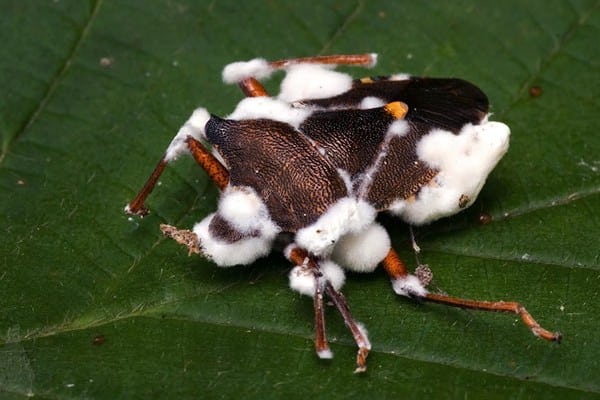
Among invertebrate fungal pathogens, Beauveria bassiana has assumed a key role in management of numerous arthropod agricultural, veterinary and forestry pests. Beauveria is typically deployed in one or more inundative applications of large numbers of aerial conidia in dry or liquid formulations, in a chemical paradigm. Mass production is mainly practiced by solid-state fermentation to yield hydrophobic aerial conidia, which remain the principal active ingredient of mycoinsecticides. More robust and cost-effective fermentation and formulation downstream platforms are imperative for its overall commercialization by industry. Hence, where economics allow, submerged liquid fermentation provides alternative method to produce effective and stable propagules that can be easily formulated as dry stable preparations. Formulation also continues to be a bottleneck in the development of stable and effective commercial Beauveria-mycoinsecticides in many countries, although good commercial formulations do exist. Future research on improving fermentation and formulation technologies coupled with the selection of multi-stress tolerant and virulent strains is needed to catalyze the widespread acceptance and usefulness of this fungus as a cost-effective mycoinsecticide. The role of Beauveria as one tool among many in integrated pest management, rather than a stand-alone management approach, needs to be better developed across the range of crop systems. Here, we provide an overview of mass-production and formulation strategies, updated list of registered commercial products, major biocontrol programs and ecological aspects affecting the use of Beauveria as a mycoinsecticide.

References

  1. Akello J, Dubois T, Coyne D, Kyamanywa S (2008) Endophytic Beauveria bassiana in banana (Musa spp.) reduces banana weevil (Cosmopolites sordidus) fitness and damage. Crop Prot 27(11):1437–1441
  2. Akello J, Dubois T, Coyne D, Hillnhutter C (2009) Beauveria bassiana as an endophyte in tissue-cultured banana plants: a novel way to combat the banana weevil Cosmopolites sordidus. Acta Hortic 828:129–138
  3. Herrero N, Duenas E, Quesada-Moraga E, Zabalgogeazcoa I (2012) Prevalence and diversity of viruses in the entomopathogenic fungus Beauveria bassiana. Appl Environ Microbiol 78:8523–8530
  4. Islam MT, Omar DB (2012) Combined effect of Beauveria bassiana with neem on virulence of insect in case of two application approaches. J Anim Plant Sci 22(1):77–82


Importance of Biofertilizers in Agriculture Biotechnology

Introduction

Biotechnology is the term which uses living organisms to improve plants, modify the product and develop organisms for further uses. Agriculture biotechnology is defined as that is used for livestock and crop improvement. Some of the following biotechnology tools which play vital role in agriculture biotechnology are-

• Genetic engineering and genetically modified crops

• Molecular breeding

• Conventional plant breeding

• Molecular diagnostic tools

• Tissue culture and micropropagation

Conventional breeding techniques include altering genetic makeup of plants and further selection of desirable traits in them. Plant breeders use to artificially mate the crops to improve their characteristics. In late 1920s, mutation breeding came into existence. Pure line development and hybrid seed technology are also some of the important conventional plant breeding techniques. Many efforts have been done to improve the nutritional quality of crops by selection method and conventional breeding but still the improvements led to undesirable agronomic traits. Current advancements have offered new opportunities to improve quality, yield and production economics of the crops. It has allowed exploring and developing new technologies to correct the deficiencies thus improving food crops nutritional value. Agriculture biotechnology includes micropropagation and tissue engineering, molecular breeding, genetic engineered crops and marker-assisted selection techniques [1]. Regeneration and multiplication of entire plant from one fragment is micropropagation. It is used for developing high quality, disease free plant materials. Cultivation of plant cells, organs and tissues on formulated nutrient media comes under plant tissue culture technique. Scientists created genetic linkage maps which give the detailed information on the possible traits, unique identity and parentage of the plant. Molecular marker-assisted breeding interrogate important genes into many crops such as submergence tolerance in rice, bacterial blight resistant rice and increased β-carotene in cassava, banana etc. Alteration of genetic makeup of the crop using recombinant DNA technology can be coined in a term known as gene manipulation or gene technology.

Biofertilizers

There has been tremendous use of insecticides, fungicides and pesticides to increase the productivity but these products are responsible for depleting essential minerals from the soil thus affecting it in a negative way. This problem has leads to the production of biofertilizers which are the cultures of microorganisms packed in a carrier material. Biofertilizers contain live or latent cells of efficient strains of phosphate solubilizing, nitrogen fixing or cellulolytic microorganisms used for the application to seeds, soil or composting areas [2,3]. The objective behind using biofertilizers is to increase the number of such micro-organisms and accelerating those microbial processes which are helpful for the availability of nutrients that can be easily assimilated by plants. They play a very important role in improving soil fertility by fixing atmospheric nitrogen and also produce plant growth substances in the soil. They promote root growth by producing hormones and antimetabolites. They help in soil mineralization and decomposition of nutrients [46]. They are cost-effective and can be used as a supplement to chemical fertilizers. Microorganisms like bacteria, fungi and blue-green algae are used as biofertilizers and to increase their shelf-life they are packed in carrier materials like peat and lignite powder. In this regard, biofertilizers have paramount significance in sustaining agricultural productivity and healthy environment [3]. They can be characterized into various categories like:

• Nitrogen fixing biofertilizers

• Phosphate solubilizing biofertilizers

• Phosphate mobilizing biofertilizers

• Biofertilizers for micro-nutrients

Plant Growth Promoting biofertilizers

Role of Different Types of Microbes

Rhizobium spp. is the nitrogen fixing bacteria formed in the roots of leguminous and some nonleguminous plants [7]. These are the gram positive soil bacteria which assimilate atmospheric nitrogen and fixes in the root nodule. They can comprise up to 1011 microbial cells per gram of root thus improving the plant productivity. Microbiome is the collective genome of rhizosphere microbial community which is larger than plants and whose interactions determine the crop health in natural agroecosystem thus providing numerous services to crop plants like nutrient acquisition, nutrient recycling, organic matter decomposition, weed and bio control. Research findings have proved that microbiome transfer therapy can play a significant role in managing plant diseases for different crops. Rhizosphere microbial communities have become a subject of great interest regarding sustainable agriculture. Cyanobacteria also known as blue green algae are photosynthetic, free living and prokaryotic organisms such as Nostoc, Anabaena, Plectonema etc. They produce nitrogenase and nitrogen fixation occurs in heterocysts which act as oxygen proof compartments. Preparation of cyanobacterial biofertilizers-

• Construction of open tanks made up of galvanized iron sheets or bricks and cement.

• Addition of sodium molybdate, super phosphate, sieved soil and water and allowed to stand for 24 h

• Cyanobacteria starter culture is sprinkled on the surface of water.

• Collection of thick serum of algal mass and allowed to dry.

Azotobacter are free living, non-symbiotic nitrogen fixing bacteria that can increase yield upto 50% and it also produces certain substances which are good for the growth of the plants. They produce antibodies, plant hormones, B-vitamins, gibberellic acid to kill root pathogens and improve seed germination. PseudomonasAspergillusBacillus, etc are some of the phosphate solubilizing microorganisms. They provide phosphate which can be further utilized by the crops. They protect the plants by chelating the iron in the root zone. Mychorrhiza fungi enhances water uptake, increase resistance towards pests and pathogens and increase the survivability towards heavy metal toxicity and high temperatures [4].

National Project on Development and use of Biofertilizers (NPDB) is a central scheme implemented by government of India to attain the production targets. The amalgamation of smaller new units with larger units has led to the introduction of variations in industries. Liquid fertilizers are also gaining attention nowadays. They are termed as special liquid formulation which contains microorganisms, their nutrients, cell protectants for longer shelf life. These biofertilizers are tolerant to high temperatures and UV radiations. They can be applied to the field by hand sprayers, fertigation tanks, power sprayers and as a mixture of basal manure and FYM.

Synthetic fertilizers usage has led to environmental pollution and soil contamination. They are quite expensive and also a threat to sustainable agriculture. In contrast to them biofertilizers are eco-friendly, economical productive, efficient and accessible to small farmers. Major research should be focused upon the production of sustainable and efficient biofertilizers. Further research is needed regarding-

• Establishing “Bio-fertilizer Act”

• Evaluation of bio-fertilizers based on agronomic, soil and economic concerns.

• Quality control systems to explore the benefits of plant micro-organisms symbiosis.

• Selection of multi-functional biofertilizers.

Despite tremendous improvement in biofertilizer technology over past few years, there are still, many constraints on the usage of biofertilizers- it may be either related to production or marketing strategies. Some precautions should also be taken under consideration while dealing with biofertilizers such as biofertilizers packets should be kept away from sunlight and heat, they should be crop specific and they should always be used with organic manures and chemical fertilizers.

Conclusion

Recent techniques include the encouragement to use pellets for direct soil application and methylcellulose for seed coating. There are various environmental factors responsible involved such as type of soil, inadequacy of organic matter, high temperature and soil water deficit. Plant growth and crop yield can be enhanced by mixing biofertilizers therefore; farmers should have knowledge about the benefits of synergistic effects of biofertilizers. Chemical fertilizers should be applied to the soil with the gap of 15-20 days for better nitrogen fixation. At district level, cold storage should be provided for timely availability of biofertilizers even after the expiry date. Biofertilizers will not only have a great impact on sustainable agriculture economic development but they will contribute the holistic wellbeing and sustainable ecosystem.

References

  1. Vikas Kumar New Academic Publishers, New Delhi Editors 2016.
  2. Paula García-Fraile, et al. AIMS Bioengineering2015. 2(3): p. 183-205.
  3. Deepak Bhardwaj, et al. Microbial Cell Factories 2014. 13: p. 66.
  4. H. A. Rather, et al. J Phyto2010, 2(10).
  5. Rakesh Kumar, et al. Popular Kheti2017. 5(4).
  6. Boraste A, et al. Int J Micro2009. 1(2): p. 23-31.
  7. Govind Gupta et al. J Microb Biochem Technol 2015. 7(2): p. 96-102.

Organic food

The benefits of Organic Farming

There are significant benefits to the environment of organic farming and therefore for people to choose organic food:

Long-term sustainability

Organic farming is a long-term, sustainable approach to food production. Organic farming takes a proactive, preventative approach instead of dealing with problems after they emerge which can be too late.

Soil

Practices that build up the soil such as crop rotation, inter-cropping, cover cropping, symbiotic planting, organic fertilisers and minimum tillage are central to organic practices. These all support and encourage healthy soil fauna and flora, improving soil formation and structure and creating a more balanced and stable soil ecosystem. Nutrient and energy cycling will increase and the retentive ability of the soil for nutrients and water are improved, which compensates for the non-use of mineral fertilisers. These soil management techniques are also important for mitigating soil erosion. The export of nutrients in crops can be compensated by on-farm renewable resources (e.g. compost, animal manure, green manure) but it is sometimes necessary to add minerals such as potassium, phosphate, calcium, magnesium and trace elements from external sources.

Water

In many agriculture areas, pollution of groundwater with synthetic fertilisers and pesticides is a significant problem. The use of these types of inputs are prohibited in organic farming. They are replaced by organic fertilisers and through greater biodiversity (in terms of crops cultivated), enhancing soil structure and water infiltration. Well managed organic systems with better nutrient retentive abilities, greatly reduce the risk of groundwater pollution.

Air and climate change

Organic farming can help mitigate greenhouse gas emissions through its ability to store (sequester) carbon in the soil. Organic agriculture reduces non-renewable energy use by decreasing agrochemical needs. The production of synthetic agrochemicals requires large quantities of energy from fossil fuels. Many management practices used by organic agriculture (e.g. minimum tillage (which reduces soil oxidation), returning crop residues to the soil, the use of cover crops and rotations, and the greater integration of nitrogen-fixing legumes), increase the return of carbon to the soil, raising productivity and increasing carbon sequestration. A number of studies report that soil organic carbon contents under organic farming are considerably higher. The more organic carbon is retained in the soil the better.

“A mere 2 percent increase in the carbon content of the planet’s soils could offset 100 percent of all greenhouse gas emissions going into the atmosphere.”

Dr Rattan Lal, Soil Scientist, Ohio State University

Biodiversity

Organic farmers are simultaneously guardians and users of biodiversity. Traditional as well as adapted breeds are preferred for their greater resistance to disease and their resilience to climatic conditions. Diverse combinations of plants and animals are optimal for nutrient and energy cycling. The maintenance of natural areas within and around organic farms and the absence of chemical inputs create suitable habitats for recolonising species.

Genetically modified organisms

The intentional use of GMOs within organic systems is not permitted during any stage of organic food production, processing or handling. Since the impact of GMOs to the well-being of people and the environment is not known, organic agriculture is taking the precautionary approach and choosing to encourage natural biodiversity.

Ecological Services

The impact of organic agriculture on natural resources favours interactions within the agro-ecosystem that are vital for both agricultural production and nature conservation. Ecological services derived include soil forming and conditioning, soil stabilisation, waste recycling, carbon sequestration, nutrients cycling, predation, pollination and habitats.

By choosing organic products, the consumer promotes a less polluting agricultural system.

CONTACT AGRITEK | 021-278-8800

0
    0
    Your Cart
    Your cart is emptyReturn to Shop